

Inner Peace: How Neuroscience Explains the Path to Lasting Calm
If you’ve been searching for “inner peace” only to find vague advice about meditation retreats or motivational quotes, you’re probably frustrated. Most conversations about calm skip over what matters most: the actual psychology of how your brain creates and maintains mental equilibrium. Inner peace isn’t a personality trait or a lucky accident—it’s a specific neurological state you can learn to access.
Over three-quarters of adults report that stress directly affects their physical health. The chaos you feel isn’t a personal failing. Your nervous system is responding exactly as it evolved to—by staying alert to threats and uncertainty. What most people don’t realize is that achieving inner peace involves retraining specific brain pathways, not just “thinking positive.” This guide breaks down the real mechanisms behind mental calm and why understanding them changes everything about your ability to build lasting peace.
Key Takeaways
- Inner peace is a trainable mental state rooted in neuroscience, not a feeling you find by chance
- Mental calm differs from happiness and requires specific emotional regulation skills you can develop
- Professional support and daily practices work together to build lasting psychological equilibrium
Table of Contents
This guide walks you through the psychological foundations of mental calm and how your brain creates lasting tranquility. You’ll explore the science behind emotional balance and learn what research reveals about achieving a stable internal state.
The content covers these key areas:
- Immediate actions you can take – Quick practices to shift your mental state
- Psychological definitions and distinctions – What separates calmness from happiness
- Brain science explanations – How your nervous system creates tranquility
- Common misunderstandings cleared up – Three widespread myths addressed
- Emotional control connections – Understanding ways to maintain inner peace through regulation
- Relationship patterns and stability – How early attachment shapes your capacity for calm
- Research-backed benefits – What studies show about mental wellness
- Who faces the biggest challenges – Risk factors that make peace harder to access
- Skill-building perspective – Why this is a trainable ability, not a destination
- Three evidence-based approaches – Proven pathways to lasting calm
- When to seek professional help – Recognizing when therapy supports your journey
- Daily support practices – Habits that maintain your progress
Understanding the Journey from Chaos to Inner Peace
Today’s Struggle with Mental Calm
Modern life creates constant pressure on your mind. You face a steady stream of notifications, work demands, and social expectations every day. This environment makes achieving emotional equilibrium feel impossible.
Research reveals that roughly 70% of people avoid looking at their internal struggles. This avoidance blocks your path to genuine calm. Less than 20% of adults regularly practice self-reflection, even though it’s a key factor in building lasting peace.
Your external world constantly clashes with your internal needs. The gap between these two creates tension that feels unavoidable. Only about 50% of people develop secure emotional patterns, which makes the challenge even harder.
Where Common Methods Fall Short
Most popular techniques offer surface-level solutions. They promise quick results but don’t address deeper patterns that keep you stuck.
These approaches typically fail because they treat inner peace like a product you can purchase or achieve overnight. Your brain needs time to build new patterns. Rushing this process usually leads to disappointment.
Traditional methods also ignore individual differences. What works for one person may not work for you. Generic advice rarely accounts for your specific challenges or background.
Research on Mental Calmness
Studies on mental health show that inner peace has measurable effects on your brain. Using evidence-based strategies can improve your outcomes by more than 40%.
Active problem-solving increases therapy success rates by 30%. Mindfulness practices reduce anxiety by roughly 30%. Setting clear boundaries boosts life satisfaction by 25%.
| Strategy Type | Measured Impact |
|---|---|
| Problem-solving approaches | 30% better therapy outcomes |
| Mindfulness-based practices | 30% less anxiety |
| Boundary development | 25% more fulfillment |
Your nervous system responds to consistent practice. The parasympathetic system, which controls your relaxation response, becomes stronger with regular training. This isn’t about willpower—it’s about understanding how your body actually works.
Breaking Free from Excessive Materialism
The pursuit of material goods creates real barriers to inner peace. Research shows that Americans carry over $800 billion in credit card debt, while one-third of people now value possessions more than their relationships. When you prioritize material possessions over inner contentment, your mental state suffers.
You might notice this pattern in your own life. About 70% of millennials report feeling pressure to maintain a lifestyle centered on buying things. This constant drive to acquire more creates stress and pulls your attention away from what truly supports your mental well-being.
Steps to reduce material focus:
- Take inventory of what you own
- Identify which items add genuine value to your life
- Donate or remove items that don’t serve a purpose
- Practice gratitude for experiences rather than possessions
Shifting away from materialism doesn’t mean you reject all possessions. It means you stop measuring your worth by what you own. This shift lets you redirect your energy toward relationships, personal growth, and the mental skills that actually build lasting calm.
Identifying and Letting Go of Harmful Connections
Warning Signs in Your Relationships
You might notice certain patterns that signal a connection is draining you. Constant criticism can chip away at your confidence over time. Manipulation tactics and emotional control create an unhealthy power balance.
Pay attention to how you feel after spending time with someone. If you consistently feel exhausted or depleted, that’s your mind telling you something important. Toxic patterns can quietly drain your energy and peace of mind.
Watch for these specific behaviors:
- Persistent put-downs that make you question yourself
- Control tactics that limit your choices
- Feeling worse about yourself after interactions
- Your self-worth slowly declining
Creating Protective Limits
You need clear boundaries to protect your mental health. Setting boundaries is essential for maintaining your emotional stability.
Start by stating your limits directly and calmly. Learning to decline requests without feeling bad takes practice but becomes easier. Your mental health deserves priority over pleasing others.
Reach out to people you trust for support during this process.
Cultivating Positive Connections
Building healthy relationships requires intention and effort. Look for connections that honor your personal space and encourage your development.
Healthy relationships provide real emotional support and celebrate your wins with you.
The Power of Present Moment Awareness
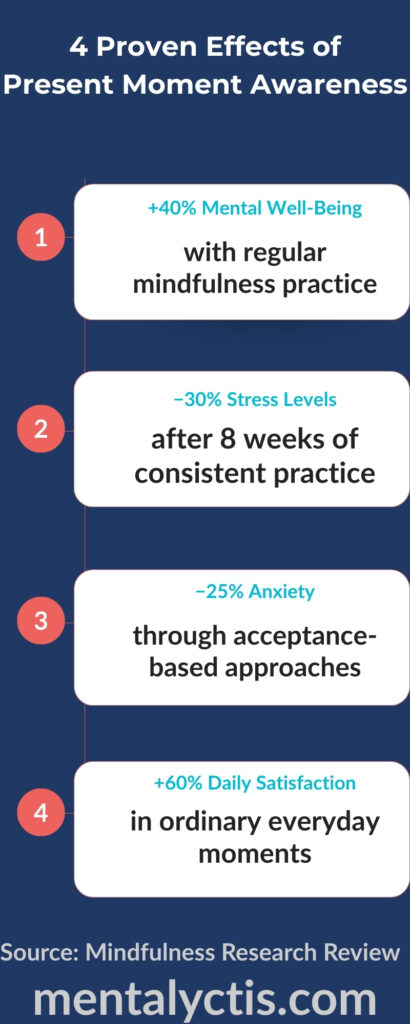
on mental well-being, stress, anxiety and daily satisfaction.
When you practice staying in the now, you activate specific mental calm psychology pathways in your brain. Your mind processes about 6,000 thoughts per day. Most of them pull you into past regrets or future worries.
Present moment awareness works differently than you might think. It’s not about emptying your mind or stopping thoughts completely. Instead, you learn to notice what’s happening right now without getting swept away by mental chatter.
Research demonstrates measurable changes when you develop this skill:
- Mental well-being increases by 40% with regular practice
- Stress levels drop by 30% after eight weeks of consistent work
- Anxiety decreases by 25% through acceptance-based approaches
- You experience 60% more satisfaction in ordinary moments
Your brain’s default mode network quiets down when you focus on the present. This reduces the constant background noise of worry and rumination.
You can start with simple practices that take just minutes:
| Practice Type | Primary Effect | Daily Time Needed |
|---|---|---|
| Conscious Breathing | Lowers stress response | 5 minutes |
| Body Scan Technique | Builds emotional awareness | 10 minutes |
| Sensory Focus | Increases engagement with life | Throughout your day |
You don’t need perfect concentration. Each time you gently redirect your attention back to now, you strengthen the neural pathways that support inner peace and mental clarity.
Cultivating Calm Through Mindful Practice
Beginning Your Meditation Journey
You don’t need hours of free time or special training to start meditating. Beginning with just 5 to 10 minutes each day can create noticeable shifts in your psychological wellbeing.
Pick a quiet spot where you won’t be interrupted. Sit in a comfortable position and bring your attention to your breathing. Notice the air moving in and out of your body.
Your mind will wander, and that’s completely normal. When you notice thoughts appearing, simply guide your focus back to your breath without judging yourself. This gentle redirection is the actual practice.
Designing Your Calm Environment
The space where you practice matters more than you might think. Your surroundings can either support or hinder your ability to settle into a mindful state.
| Space Element | What Works Best |
|---|---|
| Light | Gentle, natural daylight |
| Room Temperature | Cool and comfortable |
| Sound | Quiet with few interruptions |
| Seating | Supportive cushion or chair |
You don’t need an entire room dedicated to meditation. A corner of your bedroom or a comfortable chair works perfectly well.
Building Everyday Mindful Habits
Mindfulness extends beyond formal meditation sessions. You can weave awareness into regular activities throughout your day.
Try these simple practices:
- Morning breath work before checking your phone
- Mindful walking while moving from room to room
- Body awareness scans while lying in bed
- Gratitude noting before sleep
Research indicates that regular mindfulness meditation can improve emotional regulation and support your psychological wellbeing. Each intentional moment builds your capacity for inner peace.
Embracing Nature’s Healing Power
Stepping away from urban environments and spending time outdoors offers a direct path to inner peace. Research shows that 70% of people report decreased stress levels when they spend time in natural settings. Even brief exposure matters. Just 20 minutes outside can improve your mood and emotional state.
The biological changes are measurable. Time spent in nature can increase serotonin levels by up to 30%. This neurotransmitter plays a key role in emotional regulation and mental calm. Physical activities in outdoor settings, like hiking or swimming, can improve heart health and reduce anxiety by 80%.
| Nature Experience | Benefit |
|---|---|
| Reduced Anxiety | 80% |
| Increased Cognitive Function | 50% |
| Enhanced Life Satisfaction | 45% |
You don’t need elaborate plans. Start with simple actions like walking through a local park, caring for indoor plants, or scheduling weekend nature visits. Your nervous system will respond to these natural healing methods by shifting toward parasympathetic activation. This creates the physiological foundation for lasting mental calm.
Building Gratitude and Self-Compassion
Establishing Regular Gratitude Habits
You can start each day by writing down three things you appreciate about your life. This simple act shifts your brain’s focus toward positive aspects rather than dwelling on what’s missing. Keep a small notebook by your bed and spend two minutes each morning or evening reflecting on moments that brought you comfort or joy.
Research on compassion and gratitude shows these practices strengthen neural pathways associated with inner peace. You might notice improved sleep quality, stronger relationships, and reduced stress responses. Try setting a phone reminder to pause mid-day and identify one thing you’re grateful for in that moment.
Building Self-Kindness Skills
You need to speak to yourself the way you’d speak to someone you care about. When you make a mistake, notice the words running through your mind. Are they harsh? Critical? Replace “I’m so stupid” with “I’m learning, and that takes time.”
Self-compassion involves three core elements:
- Treating yourself with kindness during difficult moments
- Recognizing that struggle is part of being human
- Observing your thoughts without getting swept away by them
Practice placing your hand over your heart when you feel stressed. This physical gesture activates your body’s calming system and reminds you to offer yourself support.
Moving Past Harsh Self-Judgment
Your inner critic often sounds louder than it should. You can challenge these thoughts by asking yourself: “Would I say this to a friend?” Most of the time, the answer is no. Self-awareness means catching yourself in moments of self-attack and choosing a more balanced perspective.
Write down your critical thoughts, then rewrite them as observations rather than judgments. Instead of “I always fail,” try “This didn’t work out, and I can try a different approach.”
Breaking the Cycle of Overthinking
You might notice your mind running in circles, replaying the same worries over and over. More than 70% of people experience this pattern regularly. Overthinking can cause stress and anxiety, making even small decisions feel overwhelming.
The first step is recognizing when you’re stuck in mental loops. Pay attention to moments when you analyze past conversations repeatedly or predict every possible outcome before acting. These are signs that your thinking has shifted from helpful planning to harmful rumination.
Mindfulness breathing techniques offer a practical way to interrupt these patterns. When you notice overthinking starting, focus on your breath for just two minutes. This activates your parasympathetic nervous system and creates space between you and your thoughts.
Setting time limits for decisions helps too. Give yourself a specific window to consider your options, then make a choice. Decision paralysis often results from endless mental review without action.
Research shows that regular meditation practice can reduce overthinking patterns by up to 30%. You don’t need hours of practice. Starting with five minutes daily builds the skill of observing thoughts without getting caught in them.
Challenge your negative thought patterns by asking yourself: Is this thought based on facts or assumptions? Am I predicting the future? Would I say this to a friend? This cognitive flexibility helps you quiet your mind and create mental clarity.
Your ability to manage overthinking grows stronger with practice, bringing you closer to inner peace.
Finding Joy in Life’s Simple Moments
You don’t need grand experiences to develop inner peace. Your emotional wellbeing improves when you pay attention to the ordinary moments that fill your day. These small experiences help your nervous system return to a calmer state.
Rediscovering Everyday Delights
You can strengthen your capacity for inner peace through mindfulness practices that engage your senses. Try these approaches:
- Drink your morning beverage without looking at your phone
- Observe a sunset with your full attention
- Notice natural sounds during a short outdoor break
- Pay attention to physical sensations like warmth on your skin
These micro-moments shift your nervous system toward regulation.
Building Consistent Small Practices
Your brain responds well to predictable patterns. When you establish brief daily practices, you create neural pathways that support mental calm. Simple breathing exercises can activate your parasympathetic nervous system in under a minute.
Regular small rituals teach your body to recognize safety cues, which is essential for developing lasting inner peace.
Acknowledging Minor Achievements
| Type of Achievement | Mental Health Effect |
|---|---|
| Finishing a single task | Strengthens self-efficacy |
| Engaging in basic self-care | Reinforces self-worth |
| Maintaining steady effort | Lowers cortisol levels |
Research shows that recognizing small positive moments changes your brain’s baseline emotional state. When you notice these victories, you train your attention toward evidence of progress rather than only problems.
Your path to inner peace includes these quiet moments of appreciation.
The Practice of Forgiveness and Letting Go
Forgiveness is a personal process that can help you move toward inner peace by releasing emotional weight. When you hold onto resentment, your nervous system stays activated in stress mode. This makes it harder for your body to return to a calm baseline.
Research supports the mental health benefits of forgiving others and yourself. Studies show that people who practice forgiveness experience significant reductions in anxiety and depression symptoms. They also report better emotional regulation and lower physical stress markers.
Key Mental Health Improvements Through Forgiveness:
- Reduced rumination and intrusive thoughts
- Lower cortisol levels during stressful events
- Improved sleep quality
- Stronger emotional boundaries
Letting go doesn’t mean forgetting what happened or excusing harmful behavior. It means you decide to stop carrying the emotional burden of past hurts. This decision helps your brain shift from threat response to recovery mode.
Your forgiveness practice can start small. Notice when resentment appears in your thoughts. Acknowledge the feeling without judgment. Then choose whether holding onto that anger serves your mental calm right now.
The act of forgiving gives you back control over your emotional state. It’s a skill you build gradually, not a single moment of decision.
Final Thoughts
Building inner peace as a trainable skill means accepting that some days will feel harder than others. Your brain doesn’t shift into lasting calm overnight. The neural pathways that support mental equilibrium take time to strengthen through repeated practice.
Research shows that people who engage in regular mindfulness exercises experience notably lower levels of stress and worry. Even brief moments of awareness can reshape how your nervous system responds to daily pressures. Walking for ten minutes or pausing to breathe mindfully creates measurable changes in your mental state.
Your journey toward psychological wellbeing looks different from anyone else’s. What works for one person may not work for you, and that’s completely normal. The practices you’ve learned about—from self-compassion to emotional regulation—give you tools to experiment with and adapt to your life.
Cultivating inner peace and lasting calm requires patience with yourself when progress feels slow. Hard days don’t erase the work you’ve done. They’re part of the process of building resilience. Each choice you make to practice awareness or treat yourself kindly reinforces the mental patterns that support calm.
The capacity for peace exists within you already. It emerges through consistent, small actions rather than dramatic transformations.
Common Questions About Finding Mental Calm
What does inner peace mean and why is it difficult to find today?
Inner peace is a steady mental state that helps you stay balanced even when life feels overwhelming. It acts as your internal anchor during stressful times.
Modern life makes this state harder to reach because you face constant notifications, packed schedules, and endless demands on your attention. Your brain gets pulled in many directions at once.
The world moves fast, and you rarely get quiet moments to process your thoughts and feelings. This creates a gap between what your mind needs and what your daily life provides.
How much time do you need to build lasting mental calm?
Building inner peace works like developing any new skill. You need consistent practice over weeks and months, not just days.
Some people notice small shifts within a few weeks of regular practice. Others take several months to feel significant changes in how they handle stress.
Your timeline depends on:
- How often you practice calming techniques
- Your current stress levels and mental health
- The support systems you have in place
- Whether you work with a professional counselor
The process never truly ends because maintaining peace requires ongoing attention throughout your life.
Can you practice mindfulness with limited time?
You can absolutely fit mindfulness into a packed schedule. Even three to five minutes of focused breathing during your day creates meaningful benefits.
You don’t need long meditation sessions to experience results. Brief moments of awareness during routine activities count as practice.
Simple ways to add mindfulness:
- Take three deep breaths before starting your car
- Notice physical sensations while washing your hands
- Pay full attention to your first sip of coffee
- Feel your feet on the ground while waiting in line
These small practices add up over time and train your brain to find calm in everyday moments.
How do harmful relationships affect your mental calm?
Toxic relationships constantly drain your emotional energy and disrupt your sense of stability. They create ongoing stress that makes inner peace nearly impossible to maintain.
These relationships trigger your stress response repeatedly, keeping your nervous system on high alert. Your body and mind can’t relax when you regularly face criticism, manipulation, or emotional unpredictability.
Setting clear boundaries protects your mental health and creates space for peace to develop. Sometimes this means limiting contact or ending relationships that consistently harm your wellbeing. Therapy services can help you navigate these difficult situations.
Does meditation offer the only path to inner peace?
Meditation provides one effective method, but many other approaches also work well. You can choose from multiple evidence-based techniques that suit your preferences and lifestyle.
Physical activities like walking or yoga help calm your nervous system. Creative expression through art, music, or writing processes emotions and reduces mental noise.
Alternative practices include:
| Practice Type | How It Helps |
|---|---|
| Journaling | Organizes thoughts and releases worries |
| Time in nature | Lowers stress hormones naturally |
| Deep breathing | Activates your relaxation response |
| Progressive muscle relaxation | Releases physical tension |
Find the approaches that feel natural to you and build a personalized routine.
What connection does gratitude have to inner peace?
Gratitude shifts your mental focus from what’s missing to what’s present in your life. This change in perspective reduces anxiety and creates more emotional stability.
When you regularly notice positive aspects of your experience, your brain forms new neural pathways. These pathways make it easier to find calm even during challenging times.
Research shows that gratitude practices improve mental wellbeing by reducing stress hormones and increasing feelings of contentment. The practice takes just a few minutes daily but creates lasting effects on your emotional state.
Does spending time outdoors actually support inner peace?
Natural environments genuinely calm your nervous system and reduce stress markers in your body. Even brief exposure to green spaces lowers your heart rate and blood pressure.
Nature provides a break from the constant stimulation of modern life. Your attention gets a chance to rest and recover when surrounded by natural settings.
You don’t need wilderness access to gain these benefits. A short walk in a park reduces stress and improves your mood. Tending to houseplants or sitting under a tree during lunch provides similar effects on a smaller scale.
How can you reduce overthinking and increase peace?
Overthinking keeps your mind stuck in repetitive loops that prevent calm. Breaking this pattern requires you to notice when it starts and redirect your attention purposefully.
Mindfulness helps you observe thoughts without getting caught in them. You learn to watch worries pass by rather than engaging with every anxious thought.
Setting specific “worry times” contains overthinking to scheduled periods. This prevents it from taking over your entire day and gives your mind structured boundaries.
Not every thought deserves your full attention or immediate response. You can acknowledge a worry exists without making it the center of your focus.
What part does forgiveness play in achieving inner peace?
Forgiveness releases the emotional weight of holding grudges and resentment. This weight takes up mental energy that could otherwise support your sense of calm.
When you forgive others or yourself, you stop replaying past hurts repeatedly. This frees your mind to focus on the present moment rather than staying stuck in old pain.
Forgiveness doesn’t mean accepting harmful behavior or forgetting what happened. It means deciding that carrying anger costs you more than letting it go. This decision creates space for healing and peace to grow.
Can inner peace improve your work performance?
Inner peace significantly helps you handle professional challenges with more skill and less reactivity. When you maintain mental calm, you make better decisions under pressure.
Workplace benefits include:
- Clearer thinking during complex problems
- Better focus on important tasks
- Stronger creativity and innovation
- More effective communication with colleagues
- Improved stress management during busy periods
Your professional relationships also improve when you respond thoughtfully rather than react emotionally to workplace tensions.
Common Questions About Mental Calm
What daily habits help build lasting calmness?
Building mental calm requires consistent practices that regulate your nervous system. You don’t need hours of commitment to see results.
Simple daily practices include:
- Breathing exercises: Spend 2-3 minutes doing slow, deep breaths to activate your parasympathetic nervous system
- Gratitude noting: Write down three specific things you appreciated during your day
- Body scans: Check in with physical sensations for 90 seconds to strengthen mind-body connection
- Morning stillness: Sit quietly for 5 minutes before checking your phone
These daily practices to cultivate inner peace work because they train your brain to recognize calm states. Your nervous system learns patterns through repetition, not intensity.
Consistency matters more than duration. Five minutes every day creates more neural change than an hour once a week. You’re building a skill, not having a one-time experience.
Does meditation actually create deeper calm?
Meditation changes your brain structure in measurable ways. Research shows that regular meditation practice increases gray matter in areas related to emotional regulation.
You don’t need to achieve a blank mind for meditation to work. That’s a common misconception that stops people from trying. Meditation trains your attention, not your ability to stop thinking.
Different meditation approaches serve different purposes:
| Meditation Type | Primary Benefit | Time Needed |
|---|---|---|
| Focused attention | Strengthens concentration | 10-15 minutes |
| Open awareness | Reduces reactivity | 15-20 minutes |
| Loving-kindness | Builds self-compassion | 10 minutes |
| Body awareness | Grounds anxious thoughts | 5-10 minutes |
Jon Kabat-Zinn’s research at UMass showed that 8 weeks of mindfulness meditation reduced activity in the amygdala, your brain’s fear center. This wasn’t temporary relaxation. The structural changes persisted after the study ended.
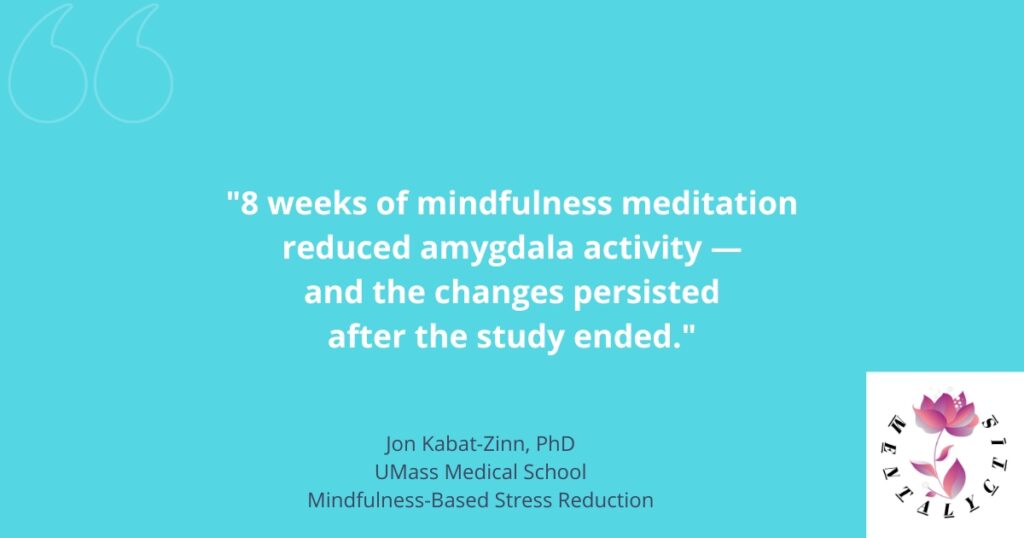
Founder of Mindfulness-Based Stress Reduction (MBSR).
Meditation techniques can significantly contribute to your ability to maintain composure during stress. You’re not escaping your problems. You’re changing how your nervous system responds to them.
How does present-moment awareness affect emotions?
Mindfulness changes your relationship with emotions rather than eliminating difficult feelings. You develop capacity to observe emotions without being controlled by them.
Your brain defaults to dwelling on past events or worrying about future scenarios. This mental time travel creates unnecessary emotional suffering. When you practice present-moment awareness, you interrupt this pattern.
Mindfulness impacts emotional well-being through three mechanisms:
- Reduced rumination: You spend less time replaying painful memories
- Increased distress tolerance: You can sit with uncomfortable feelings without reacting
- Enhanced emotional clarity: You recognize what you’re actually feeling instead of responding to confused emotional states
Daniel Siegel’s research at UCLA shows that mindfulness expands your Window of Tolerance. This is the zone where you can process emotions without becoming overwhelmed or shutting down. When your window is narrow, small stressors trigger big reactions.
Mindfulness doesn’t make you emotionless or passive. It gives you a brief gap between feeling and reacting. That gap is where choice lives. You can feel angry and still choose how to respond.
How do different cultural perspectives understand peaceful states?
Various cultures have developed distinct frameworks for understanding calm mental states. These approaches share common themes despite different language and contexts.
Eastern philosophical traditions emphasize acceptance and non-attachment. Buddhism teaches that suffering comes from clinging to what changes. You find calm by releasing the need to control outcomes. Hinduism describes inner stillness as your natural state once you stop identifying with racing thoughts.
Western psychological approaches frame calm through nervous system regulation and cognitive patterns. You achieve stability by understanding brain mechanisms and developing specific skills. The focus is on trainable capacities rather than spiritual awakening.
Stoic philosophy from ancient Greece taught emotional resilience through rational thinking. You find calm by distinguishing what you control from what you don’t. This tradition influenced modern cognitive therapy approaches.
Different philosophies and teachings define peaceful states in ways that reflect their cultural values. Eastern models often prioritize harmony with larger forces. Western models emphasize personal agency and skill development.
You don’t need to adopt any specific belief system. The practical techniques from various traditions work regardless of your worldview. Choose approaches that match your personal values and life context.
Why does releasing past events matter for current peace?
Your brain stores unprocessed experiences as active emotional charges. These unresolved events continue triggering stress responses in your present life.
When you hold onto past hurts, your nervous system remains partially activated. You’re carrying a background level of tension that colors everything else. This isn’t a character flaw. It’s how emotional memory works.
Letting go involves several processes:
- Acknowledging what happened without minimizing your experience
- Processing the emotions you couldn’t feel at the time
- Releasing the expectation that the past should have been different
- Redirecting mental energy toward present circumstances
Letting go doesn’t mean forgetting or excusing harmful behavior. You’re not saying the past doesn’t matter. You’re choosing to stop letting old events control your current nervous system state.
Kristin Neff’s research at UT Austin shows that self-compassion accelerates this process. When you treat yourself with kindness about past experiences, you process them more completely. Harsh self-judgment keeps wounds fresh.
You might need professional support to release significant past experiences. Therapy provides structured approaches for processing events that feel too overwhelming to handle alone. This isn’t weakness. Some experiences require specialized help to integrate.
What life adjustments create ongoing stability?
Sustained calm requires changes to your daily patterns, not just mental techniques. Your lifestyle either supports or undermines nervous system regulation.
Sleep consistency forms the foundation. Your brain consolidates emotional experiences during sleep. Poor sleep leaves your amygdala overactive and your prefrontal cortex underactive. You become more reactive and less capable of managing responses.
Physical movement discharges stress hormones that build up in your body. You don’t need intense exercise. Walking, stretching, or gentle yoga provides nervous system benefits. Movement tells your body that the perceived threat has passed.
Social connection with supportive people buffers stress. Your nervous system literally regulates through interaction with calm nervous systems. Isolation maintains elevated stress responses even when external